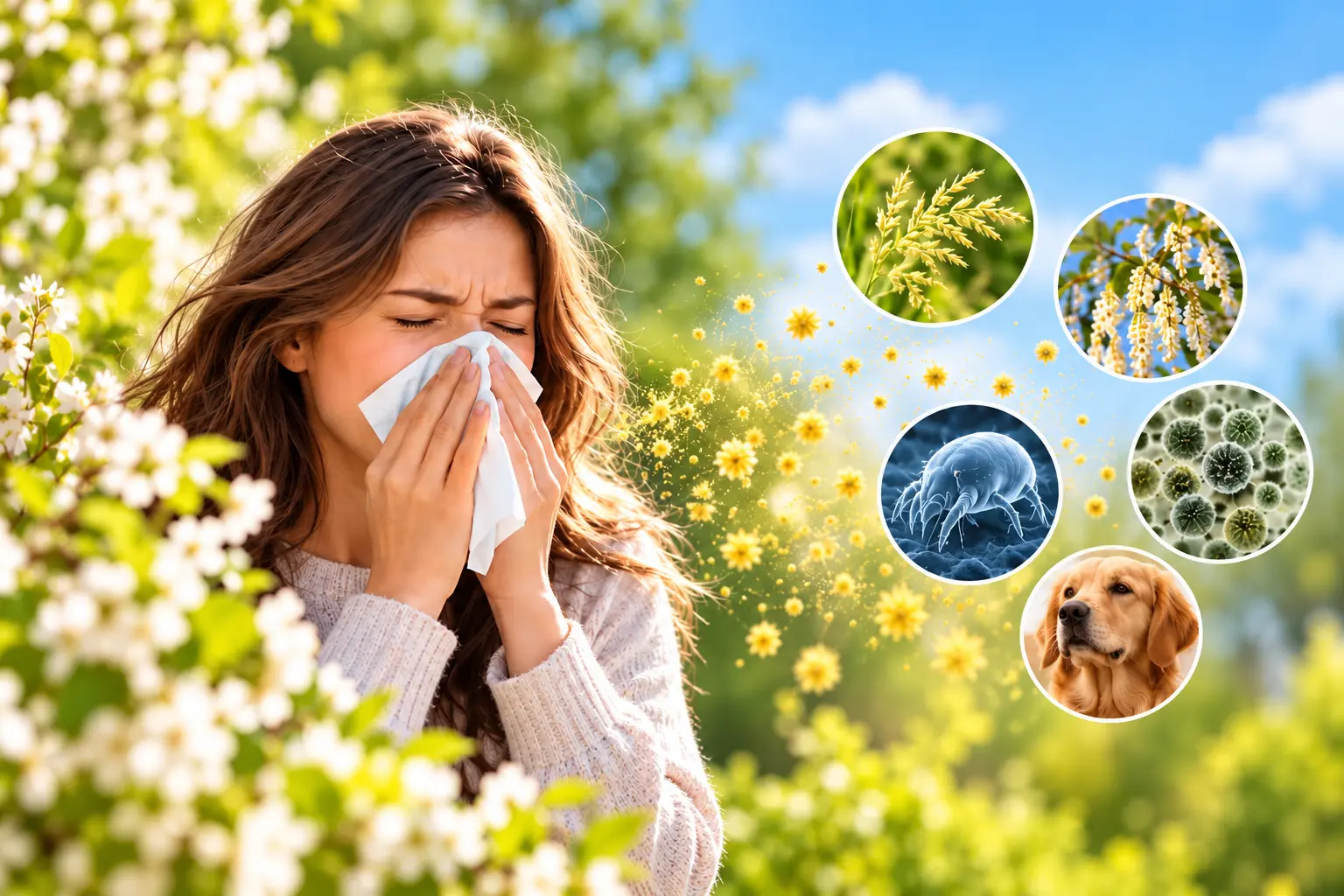
Hay fever is an allergy that makes your nose and eyes react to things in the air, most often pollen, dust mites, mould or animal dander. It affects around 1 in 5 adults in Australia, and in NSW and Queensland it often flares from October to December, when spring pollen is high.
What is hay fever (allergic rhinitis)?
Hay fever is the common name for allergic rhinitis, an allergic reaction in the lining of the nose and often the eyes. Despite the name, it isn't caused by hay and doesn't cause a fever (ASCIA).
ASCIA estimates it affects around 18% of children and adults in Australia and New Zealand. There are two broad patterns:
- Seasonal hay fever: linked to airborne pollen from grasses, trees and weeds, plus mould spores.
- Perennial (year-round) hay fever: usually linked to dust mites, animal dander and mould.
Poorly managed allergic rhinitis can increase the risk of developing asthma, and lead to more asthma symptoms in people who already have it (ASCIA).
Hay fever symptoms: is it hay fever or a cold?
Hay fever usually causes itching and sneezing without a fever, and it keeps coming back whenever you meet your trigger. A cold is a viral infection of the nose and throat that tends to clear up on its own.
Common symptoms of hay fever allergy include:
- sneezing and an itchy, runny or blocked nose
- itchy, watery eyes
- an itchy throat or frequent throat clearing
- mouth breathing and snoring
- in more severe cases, poor sleep, tiredness, headaches and trouble concentrating
What triggers hay fever in spring in NSW and QLD?
In spring, the main hay fever trigger is airborne pollen from grasses, trees and weeds. ASCIA notes seasonal symptoms often get worse on hot, windy days and after thunderstorms, and tend to improve in wet weather.
In NSW, pollen is at its highest through spring, and October to December is the peak thunderstorm asthma period (NSW Health). In Queensland's subtropical climate, grass and tree allergies may flare in spring and summer, but symptoms can occur at any time of year (Queensland Children's Hospital).
Simple ways to cut your exposure (healthdirect):
- stay indoors when it's windy, the pollen count is high, or during and after thunderstorms
- keep windows closed at home and in the car
- wear sunglasses outside and shower after time outdoors
- dry washing inside on high-pollen days
Which hay fever treatments can a pharmacist help with?
For mild or occasional hay fever, a pharmacist, including at a late-night pharmacy, can recommend non-prescription medicines after asking about your symptoms, other medicines and health conditions.
- Intranasal corticosteroid sprays: reduce inflammation in the nose. They work best used every day and may take a few days to help.
- Antihistamines: tablets, syrups, nasal sprays or eye drops that ease sneezing and itchy eyes. They are less effective for a blocked nose.
- Combination nasal sprays: contain an antihistamine and a corticosteroid together.
- Saline sprays or rinses: a gentle way to wash pollen and other allergens out of the nose.
- Decongestants: sprays should only be used for a few days at a time. Tablets can raise blood pressure, so check with a pharmacist or doctor first if you have high blood pressure.
When should you see a doctor about hay fever?
See a doctor if your symptoms are persistent, meaning at least 4 days a week for 4 weeks or more, or if they are moderate to severe (healthdirect). Also see a GP if:
- symptoms affect your sleep, work, school or sport if you need time off)
- pharmacy medicines haven't helped (see getting medicines after hours)
- you have asthma, or you wheeze and sneeze in spring without an asthma diagnosis (NSW Health)
A GP may arrange allergy testing, usually a skin prick or blood test, or refer you to a clinical immunologist or allergy specialist. For severe allergic rhinitis, a specialist may suggest allergen immunotherapy (desensitisation): gradually increasing doses of allergen extract, by injection or under the tongue, usually over three to five years, to reduce symptoms or the need for regular medicine (ASCIA).
Hay fever and thunderstorm asthma: why spring storms matter
Thunderstorm asthma happens when storm conditions break grass pollen into tiny particles that can be breathed deep into the lungs. Adults with seasonal hay fever who are sensitive to grass pollen are at the highest risk, even if they have never been diagnosed with asthma (healthdirect).
It usually occurs in spring and early summer, often in the windy period before rain arrives. Symptoms include shortness of breath, chest tightness, wheezing and a persistent cough, and they can get worse very quickly. NSW Health says the greatest risk in NSW is in southern NSW and the Riverina, with events recorded west of the Great Dividing Range from Tamworth to Albury (NSW Health).
To lower your risk this spring:
- treat hay fever and asthma consistently through the season
- if you have asthma, take your preventer as prescribed, carry your reliever and keep your asthma action plan up to date
- check weather forecasts and pollen counts, and stay indoors with windows closed when pollen is high and a storm is coming
Face masks don't protect against the particles that trigger thunderstorm asthma (healthdirect).
Red flags: when to call 000
Call triple zero (000) straight away if someone has severe breathing difficulty or signs of a severe asthma attack.
|
Call 000 now if someone has: severe trouble breathing, or breathing so laboured they can't speak in full sentences lips turning blue a reliever puffer that gives little or no relief asthma symptoms that are getting worse quickly, especially during or after a storm Follow the asthma action plan or asthma first aid and stay indoors with the person until the ambulance arrives. Sources: NSW Health, healthdirect. |
Not sure whether it's an emergency? See when to call 000 or use after-hours care.
For non-urgent hay fever or allergy symptoms when your regular GP is closed, 13CURE offers after-hours home doctor and telehealth care across NSW and QLD, Monday to Friday 6pm to 8am, Saturday from 12pm, and 24 hours on Sundays and public holidays. You can book online or call 13 2873.
Related reading
- After-hours care for kids: what to do when a child gets sick at night.
- How a telehealth GP appointment works: what happens in a phone or video consult.
- What an after-hours doctor can treat: common non-emergency problems seen after hours.
- Urgent care vs the emergency room: how to choose the right level of care.