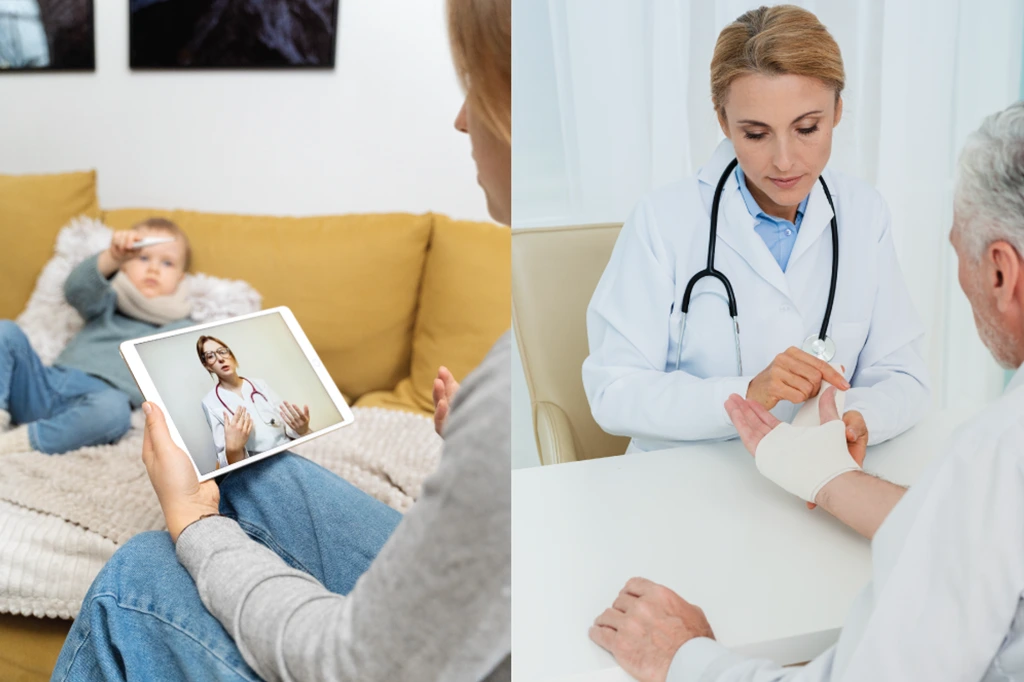
- If you are not sure, then why not use telehealth? For common illnesses like colds, flu, rash, and UTI, or if you only need medical advice and medication, telehealth will be the quickest and most effective solution.
- When a Doctor Has to Examine You Physically, You Have to Be There. A home visit is essential when a diagnosis is made through a hands-on examination, such as listening to the chest with a stethoscope, examining the ear, or palpating the abdomen.
- The Routes are Available to Each Other: Choosing a "perfect" first time is unnecessary. You may initially have a telehealth consultation; if the doctor needs an in-person meeting, they can set one up.
- Think About Your Condition: Telehealth offers nearly instant access from anywhere and is therefore suitable for quick advice. On the other hand, home visits bring the clinic to your door and are perfect for ill children, older people, or people with mobility problems.
The Power of the Pixel: When Telehealth Works Best
You want to get help quickly when you are sick after regular hours. Still, with today's healthcare offering more options than ever, you might have to decide whether to schedule a telehealth consultation or request an in-person home visit.
Choosing a virtual or a physical consultation means not deciding which way is better, but which tool is right for the work. One offers spectacular speed and ease of use, while the other ensures a hands-on assessment. This guide serves as a fast and valuable tool to help you make a confident telehealth urgent care decision, thus ensuring that you receive the care that is not only most appropriate but also most effective when you are in great need of it. Both approaches are key components of a strong after-hours urgent care system.
Telehealth is a significant change in healthcare, making a doctor available at your convenience, "in your pocket". Quite often, a professional medical opinion is given quickly rather than waiting for a home doctor's visit.
A virtual GP vs. home visit comparison shows that telehealth is the best option for cases where a doctor can obtain sufficient details by talking with and observing the patient.
Services Australia explains that after-hours GP services can be bulk-billed, meaning you pay nothing out of pocket.
For a telehealth consultation, your best cost-efficient care choice would be for:
- Most skin problems, such as rashes, insect-induced skin irritation, minor burns, and bacterial infections such as cellulitis, can, in most cases, be diagnosed correctly by just looking.
- Common Viral Illnesses: The "assessment" of the symptoms of colds, flu, and COVID-19 is only through an in-depth discussion of your symptoms, and it is very accurate.
- Gastroenteritis: Based on doctor's observations, they can assess your dehydration level and create a treatment plan for vomiting and diarrhea.
- Routine Prescriptions and Referrals: Repeating a prescription for a stable condition is extremely simple and fast via telehealth, as is obtaining a medical certificate or a specialist referral.
- Urinary Tract Infections (UTIs): Usually, the doctor's symptoms of the most apparent UTI are enough for diagnosis and prescription of necessary treatment without a physical check.
- Mental Health Consultations: Telehealth measures are here to stay, and offering mental health concerns to your GP through telehealth is one of the easiest and most comfortable ways.
Make sure telehealth suits your situation by looking over conditions suitable for video diagnosis first. If any of the above were your circumstances, the quickest way to get better would be to see an after-hours doctor, either via a home visit or a telehealth consultation.
The Hands-On Approach: When A Home Visit Makes Sense
Technology may be powerful, but in some cases, it can't replace the incredible value of a doctor's physical exam. It is good to call a doctor for a home visit when the doctor needs physical contact or specialised instruments. Think about visiting the doctor at home if you have:
- Breathing Difficulties: If shortness of breath, wheezing, or a prolonged, chesty cough accompanied by sounds from the lungs is your or your child's symptoms, then the doctor must sound the lungs with a stethoscope to find out whether it is pneumonia, bronchitis, or asthma that is causing this condition.
- Severe Pain: A sudden, unexplained, and intense pain, mainly in the abdomen, chest, or head, immediately warrants a physical examination to determine the cause and assess for signs of danger.
- Ear Pain in Children: Only by putting an otoscope inside the ear and looking at the ear can the doctor diagnose an Infection of the Middle ear. This is particularly important for young children who have not yet developed speech.
- Minor Injuries: A doctor can determine how deep your cut is, whether it needs stitching, and the extent of your sprained, swollen joint by examining the joint.
- Dizziness or Vertigo: The in-person session is the only way to conduct the balancing assessment and specific neurological tests for this condition.
- Very Unwell Patients: Checking vital signs hands-on is the safest method for caring for such patients, especially the elderly who have lost their strength. These small children are very dull and challenging to assess virtually, or are generally unwell.
In some cases, your usual GP will need to see you in person before any ongoing medication treatment decisions can be made. These examples demonstrate the continuing necessity of traditional home doctor visits in the era of advanced medicine.
No Wrong Door: Hybrid Pathways & Follow-Ups
In some cases, your usual GP will need to see you in person before any ongoing medication treatment decisions can be made. You can decide whether to have a telehealth or a home visit without a stressful, life-changing moment. The best healthcare systems are designed to be adaptable, and their "no wrong door" concept leads you to the care level that suits you the most.
Better Health Channel advises that for after-hours medical problems, options include pharmacies, after-hours clinics, and doctors at home.
The Hybrid Pathway
The patient's journey may include both care methods, which collaborate smoothly in many cases:
- Call First: The patient contacts a GP via a fast communication method (video or phone).
- Work Up: The GP collects information from the patient, examines the situation, and thus gives first advice and maybe even a prescription to relieve the symptoms on the spot.
- Decision to See Patient: If the doctor needs a physical examination to confirm the diagnosis, they can arrange for the mobile doctor to attend a follow-up visit at home directly.
Such a coordinated system allows you to benefit from fast telehealth triage and access the hands-on approach when your condition dictates. This is the hallmark of high-standard 24-hour doctor services, combining efficiency with clinical excellence.
Related articles
Need a doctor after hours
Our team is available 24/7 for bulk billed home visits across Australia.