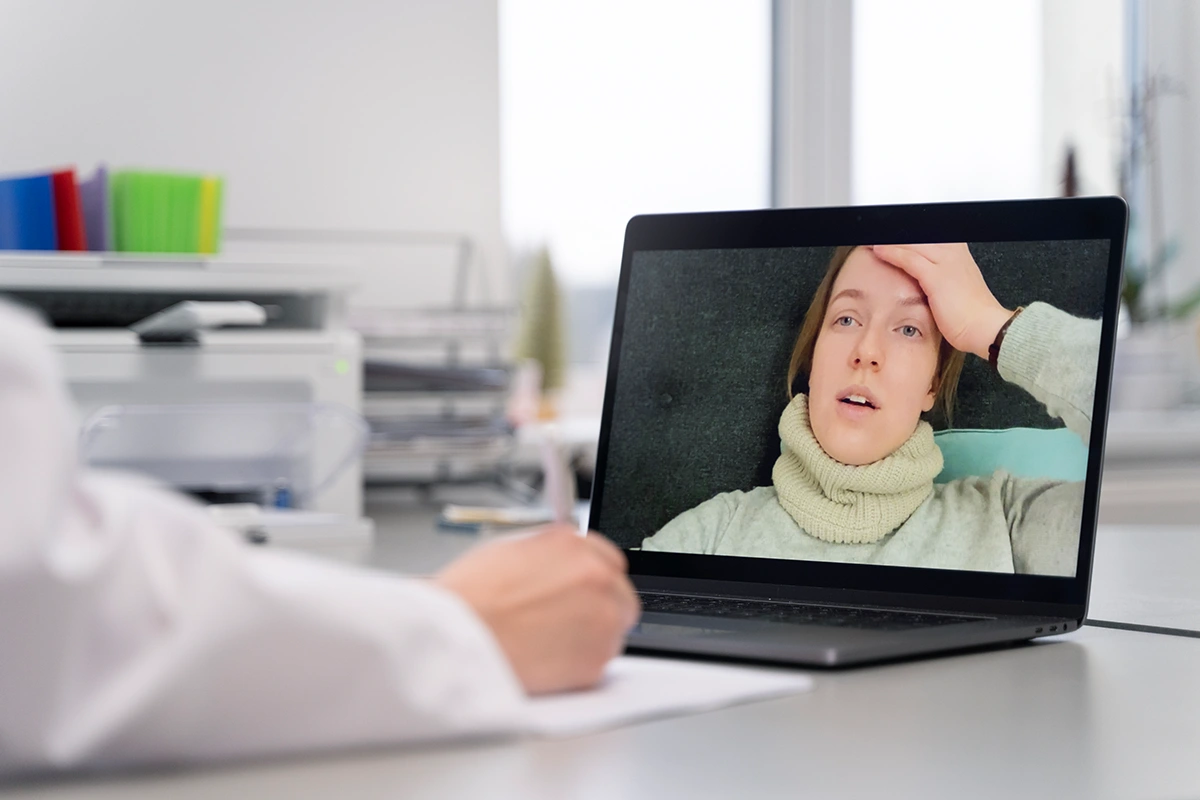
Anxiety is the most common mental health condition in Australia, and the gap between "normal worry" and something worth treating is genuinely hard to judge from the inside. Most people who eventually get help say the same thing afterwards: they waited far longer than they needed to. This guide covers what anxiety symptoms actually look like, the real difference between a panic attack and an anxiety attack, and what treatment involves here. If distress has become severe tonight, an after-hours GP consultation or a telehealth appointment with a doctor is available outside regular clinic hours.
What anxiety is, and when it becomes a disorder
Anxiety itself is normal and useful. It is the body preparing for something that might go wrong - the alertness before an exam, a job interview, a difficult conversation. It is supposed to switch on, do its job, and switch off.
It becomes a disorder when that system stops switching off. The three markers clinicians look at are proportion, persistence and interference: the worry is out of scale to the actual situation, it keeps going for weeks or months rather than passing, and it has started shaping what you do - declining invitations, avoiding phone calls, lying awake, taking the long route to dodge something.
Roughly one in four Australians will experience an anxiety condition at some point. It is treatable, and the treatments work well for most people.
Anxiety symptoms: physical, mental and behavioural
Anxiety is often described as a thinking problem, which undersells how physical it is. Many people see a doctor about their chest or their stomach long before they mention worry.
Physical anxiety symptoms
- Racing or pounding heart, or a sense of the heart skipping
- Shortness of breath, or breathing that feels effortful and unsatisfying
- Chest tightness or pressure
- Stomach churning, nausea, or changes in bowel habits
- Muscle tension, particularly in the jaw, neck and shoulders
- Sweating, trembling, dizziness or light-headedness
- Persistent fatigue, and difficulty falling or staying asleep
- Headaches and a dry mouth
Mental and emotional symptoms
- Worry that loops and will not resolve, often about several things at once
- Anticipating the worst outcome as the likely one
- Difficulty concentrating, or the mind going blank under pressure
- Irritability that seems out of character
- A background sense of dread with no identifiable cause
- Feeling detached from yourself or your surroundings
Behavioural signs
These are often what family notice first: avoiding situations, places or people; seeking constant reassurance; checking and rechecking; leaving early or not going at all; and increased use of alcohol to take the edge off, which reliably makes the underlying anxiety worse over time.
Types of anxiety
Generalised anxiety disorder
Persistent worry across many areas of life - health, money, work, family - rather than one specific trigger. It tends to be long-running and is often described as never being able to fully relax.
Social anxiety
Intense fear of being judged, embarrassed or scrutinised by others. Social anxiety is frequently mistaken for shyness, but the distinguishing feature is the anticipation: the dread builds for days before an event, and the replay afterwards can last just as long. It commonly shows up as avoiding presentations, eating in front of people, phone calls, or speaking up in meetings. It typically begins in adolescence and responds well to treatment, though people often live with it for a decade or more before seeking help.
Panic disorder
Recurrent panic attacks, plus persistent fear of the next one. That second part is what makes it a disorder rather than a series of unpleasant episodes - the fear of panic starts to restrict where people will go.
Health anxiety
Preoccupation with the possibility of serious illness, where normal bodily sensations are read as evidence of something grave. Health anxiety has a particularly self-sustaining structure: checking the body and searching symptoms online provides relief for a short while, then increases the anxiety, which prompts more checking. Reassurance from a doctor also tends to wear off within days, which is why reassurance alone is rarely the treatment.
Specific phobias and other presentations
Intense fear of a particular object or situation - flying, needles, heights, enclosed spaces. Anxiety also features in obsessive compulsive disorder and post-traumatic stress disorder, which are classified separately but share considerable overlap in how they feel.
Status anxiety: worry about where you stand
Not every form of anxiety is a diagnosis. Status anxiety is the term for persistent worry about your position relative to other people - income, job title, housing, how your life appears to be going compared with people you went to school with. It is not a clinical condition and you will not find it in a diagnostic manual, but it is a real and common driver of anxious feelings, and it has become considerably louder in an environment where everyone broadcasts their best moments.
It matters here for two reasons. First, it overlaps heavily with social anxiety - both are rooted in the fear of being judged and found lacking. Second, chronic comparison produces genuine physiological stress: disrupted sleep, muscle tension, difficulty concentrating, the same symptom list as above.
What helps is usually not reassurance that you are doing fine. It is reducing exposure to the comparison itself, particularly social media, and examining the standard you are measuring against and where it came from. If worry about status has reached the point of affecting sleep, work or relationships, it has crossed into territory worth discussing with a professional regardless of what it is called.
Panic attack vs anxiety attack: what is the actual difference?
This question gets asked constantly and answered vaguely, so here is the precise position.
A panic attack is a defined clinical term. It is a sudden surge of intense fear that peaks within about ten minutes, accompanied by physical symptoms - pounding heart, shortness of breath, chest tightness, shaking, sweating, numbness or tingling, and often a conviction that you are dying or losing control. It typically arrives without warning, sometimes with no trigger at all, and subsides within twenty to thirty minutes, leaving people exhausted.
An "anxiety attack" is not a formal diagnostic term. It is everyday language, and people use it for a period of intense anxiety that builds more gradually in response to an identifiable stressor, is less physically overwhelming, and can persist for hours or days rather than peaking and passing.
The practical distinction:
| Panic attack | Anxiety attack (colloquial) | |
|---|---|---|
| Clinical status | Defined diagnostic term | Not a formal diagnosis |
| Onset | Sudden, often unprovoked | Gradual, usually a known trigger |
| Peak | Within about 10 minutes | Builds and plateaus |
| Duration | Usually 20-30 minutes | Hours to days |
| Physical intensity | Severe, often frightening | Milder but sustained |
| Common fear | "I am dying" or "losing control" | Worry about the specific trigger |
Both are real and both deserve attention. The terminology matters mainly because describing symptoms accurately helps a doctor work out what is happening, and because a first panic attack is frequently mistaken for a cardiac event - which is a reasonable mistake, and a reason to be checked rather than to feel foolish.
How to reduce anxiety: what actually helps
These are general measures that may help with day-to-day anxiety. They are not a substitute for treatment where an anxiety disorder is present.
In the moment
Slow, extended exhalation is the most reliable immediate tool, because a longer out-breath than in-breath shifts the nervous system out of alarm. Breathing in for four and out for six, repeated for a couple of minutes, is enough. Grounding - naming what you can see, hear and touch around you - interrupts the spiral by moving attention outward. Neither stops a panic attack dead, but both shorten it, and knowing the attack will pass on its own is itself useful information.
Day to day
- Regular physical activity, which has solid evidence behind it for anxiety - walking counts
- Consistent sleep and wake times, since sleep loss and anxiety amplify each other
- Reducing caffeine, which produces physical symptoms almost identical to anxiety
- Reducing alcohol, which lowers anxiety for a few hours and raises it the following day
- Limiting symptom-searching and news scrolling, both of which feed health anxiety specifically
- Keeping up the things you have been avoiding, in small steps - avoidance shrinks anxiety briefly and grows it over time
If these are not making a meaningful difference after a few weeks, that is not a personal failure. It is information, and it means the next step is professional support rather than trying harder at the same things.
Anxiety treatment in Australia
Anxiety disorder treatment is well established and generally effective. There are two main arms, and they are often combined.
Anxiety therapy
Psychological treatment is first-line for most anxiety conditions. Cognitive behavioural therapy has the strongest evidence base - it works on the thoughts driving the anxiety and, crucially, on gradually re-entering avoided situations. Exposure-based approaches are particularly effective for phobias, social anxiety and panic disorder. Acceptance and commitment therapy is another well-supported option. Most people see meaningful change within eight to twelve sessions, and these are skills that remain available afterwards.
How to access subsidised therapy
In Australia, the usual route is a Mental Health Treatment Plan. Your regular GP assesses you, prepares the plan, and refers you to a psychologist or other mental health professional, which gives access to up to 10 Medicare-subsidised individual sessions per calendar year. Rebates do not always cover the full fee, so it is worth asking about the gap when booking. Free telephone and online counselling services exist as well, and are a legitimate starting point rather than a lesser option.
Medication
Medication is sometimes recommended alongside therapy, particularly for moderate to severe anxiety. Whether it is appropriate, which type, and for how long are decisions made between you and your doctor based on your symptoms, history and other medications. Anything prescribed for anxiety in Australia requires a prescription and medical supervision, and should never be sourced from anyone other than a pharmacy on a valid script. This article does not recommend any specific medicine.
What treatment usually is not
There is no credible evidence for a quick fix, and no supplement, device or program can guarantee results regardless of how confidently it is marketed. Treatment that works is generally unglamorous, takes some weeks, and involves doing things that feel uncomfortable at first.
When to seek help
Speak to a doctor if:
- Anxiety has persisted for several weeks and is not easing
- It is affecting sleep, work, study or relationships
- You are avoiding things you used to manage
- You are experiencing panic attacks, or fearing the next one
- You are using alcohol or other substances to cope
- Physical symptoms are present and have not been medically assessed
- Low mood is present alongside the anxiety, which is very common
- Someone close to you has raised concern
Where 13CURE fits
Ongoing anxiety care - diagnosis, therapy, treatment plans and review - belongs with your regular GP and a mental health professional who can follow your progress over time. 13CURE covers the after-hours gap: the evening when symptoms have escalated and your clinic is closed, when physical symptoms need assessing, or when you simply cannot wait until morning to speak to a doctor. Bookings are taken Monday to Friday from 6pm through to 8am, Saturdays from 12pm, and 24 hours on Sundays and public holidays, for non-life-threatening concerns. Consultations are bulk billed for eligible Medicare and DVA cardholders, and the bulk billing GP page explains eligibility.
A bulk billed telehealth appointment is often the easiest option when leaving home feels like too much. Where an in-person assessment is needed, a home doctor visit may be available depending on location - the areas we cover page lists current coverage.