
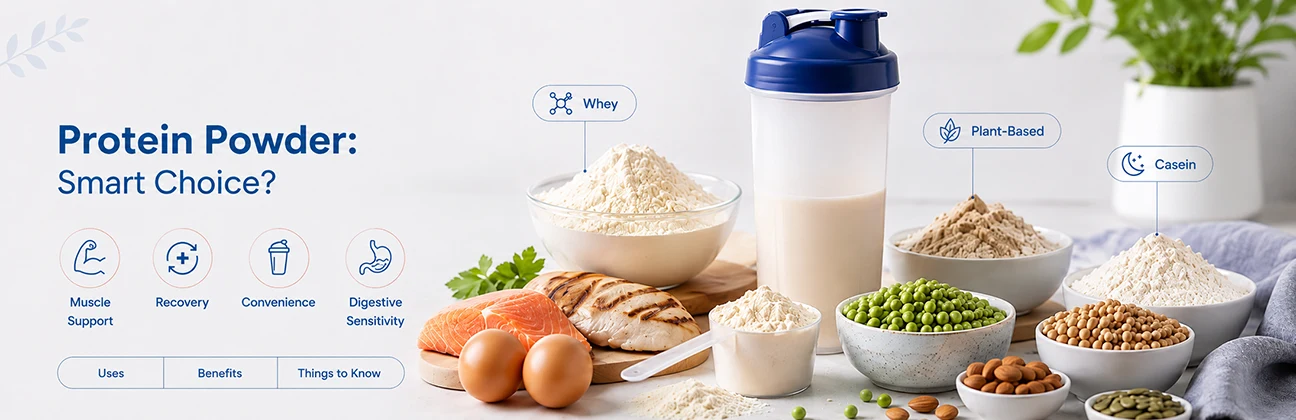
Protein is an essential nutrient that should be consumed every day. It supports muscle maintenance and growth, helps maintain healthy bones, and contributes to many other functions in the body, including immune function and resistance to respiratory infections. Although most people consume sufficient protein in their diet, many take protein powder supplements. Good food and lifestyle choices can help support a strong immune system when respiratory infections are circulating.
Protein powder can be added to the diet when you want to increase the amount of protein in your diet without actually increasing the quantity of food you eat. This is particularly useful if you have trouble eating enough to reach your nutritional requirements. Given the variety of products available, a discussion of varieties, benefits, and drawbacks is expedient.
Here is your full go-through on protein powder, including whey protein powder, vegan protein powder, potential protein powder side effects, and whether weight loss protein powder is supported by scientific evidence.
What Is Protein Powder?
Protein powder is a protein supplement that can be mixed with water or milk to increase your intake of protein. Protein powders are not substitutes for main whole food meals.
Most protein powders are made from one or more protein sources, including:
- Milk
- Peas
- Soy
- Brown rice
- Hemp
- Egg whites
Common Types of Protein Powder
Whey Protein Powder
Whey protein powder is one of the most commonly used protein supplements. The by-product of cheese, whey, contains all nine amino acids.
Characteristics include:
- Easily digestible.
- Faster absorbed
- Complete proteins of good quality.
Vegan Protein Powder
Common sources of vegan protein powder include:
- Pea protein
- Soy protein
- Brown rice protein
- Hemp protein
- Pumpkin seed protein
Most contemporary protein supplements use a mixture of multiple sources of plant proteins to compensate for potential "shortfalls" in any one particular protein
Vegan protein powder may be suitable for:
- Vegans
- Dairy-intolerant people
- People who are lactose intolerant
Plant-based protein powders may be another option if supplemented within an overall balanced diet.
Casein Protein
Another milk protein is casein.
It is relatively slow to digest and is used at a significantly lower rate by the body than whey protein, providing a more gradual delivery of amino acids.
Most people use casein in between meals or later in the evening because of its slow digestion.
Significance of Proteins
Amino acids are one of the building blocks of proteins, which again are known as the 'building blocks of the bod'.
Protein contributes to:
- Muscle growth and repair.
- Maintenance of bones.
All adults need dietary protein regularly. But the needs of specific proteins will vary according to age, activity, health, and other factors.
Use of Protein powder
Protein powder may be convenient for people who:
- Exercise once in a while.
- Participate in strength training.
- Stressed about not having enough time to cook meals
- Finding it difficult to intake enough protein from foods
But naturally, protein powder cannot be a substitute for a healthy, balanced, nutrient-filled whole meal.
Protein Requirements
Protein consumption varies by individual.
Factors that influence protein needs include:
- Age
- Size of the body.
A mixture of these foods can give enough protein intake for most healthy adults.
- Leg meat
- Fish
- Eggs
- Legumes
- Nuts
- Seeds
If you are uncertain about your individualized protein requirements, consult an appropriately qualified healthcare professional.
How to Choose a Protein Powder
No two types of protein powders are the same.
When comparing products, consider:
Protein Source
Choose a protein source that is compatible with your dietary needs and nutritional intake.
Examples include:
- Whey
- Pea
- Soy
- Rice
- Hemp
Protein Content
Pay attention to the number of grams of protein actually included in the serving size, not just the serving size.
Dietary Requirements
Choose products that suit your individual needs, such as:
- Dairy-free
- Gluten-free
- Lactose-free
- Vegan
Does Protein Powder Have Any Side Effects?
Most healthy people can incorporate nutritional protein powder into their diet as long as it is ingested in moderation.
But it's not without side effects; there are some to consider:
Digestive Discomfort
Some people may experience:
- Bloating
- Gas
- Stomach ache, pain, indigestion, reflux, feeling bloated, and anything else that can be painful or uncomfortable.
- Diarrhoea
This might be exacerbated in those who are lactose intolerant when taking in whey-related products.
Allergic Reactions
Always check that a product has no eggs, dairy, soya, or any other allergens before using any proteins.
Effects of Protein Powder
However, it is tolerated by most other healthy adults and may cause mild gastrointestinal side effects or other adverse reactions in some individuals, so some people should go to the doctor before taking any supplements.
This includes people with:
- Renal disease.
- Food allergies,
- Dietary conditions requiring specialized foods
If you experience prolonged digestion responses or out-of-proportion responses to the addition of a protein powder, then stop taking it and consult a medical health practitioner.
Does Protein Powder Help in Losing Weight?
Most people do seek out protein powder for weight loss, but that doesn't make any protein powders for weight loss.
Instead, increasing protein intake may help some individuals feel more satisfied after eating if consumed as part of a healthy, balanced diet.
However, weight loss depends on multiple factors, including:
- Total number of calories consumed.
- Physical activity
- Sleep
- Lifestyle preferences over the years
Including protein powders in a varied diet is acceptable if it supports your nutrition needs without substituting the importance of well-balanced eating and an active lifestyle.
Is Protein Powder for Everyone?
Using a protein powder can be an easier option for some, but it is not necessary for everyone.
Some individuals may be able to obtain enough protein to fulfill their daily requirements from foods and would not have to take a supplement.
The most effective way is probably to create a balanced diet incorporating various sources of protein and other foods, and to efficiently utilize supplements if and when they are required for your needs.
Tips for Using Protein Powder
If you decide to include protein powder in your routine:
- Use as a complement to balanced meals, never as a replacement for them.
- Use the directions for serving on the product labels.
- Make sure you stay well hydrated all day long.
You don't need protein supplements. If you eat sensibly, with the right balance of foods, you'll get plenty of it.
Conclusion
Reasons to use protein powder include supplementing your diet with additional protein. It may be an easy way to get extra protein, say, after working out but only use after the consultation with a health expert. If you're trying to stay healthy. You may find a variety of protein powders to choose from whey, casein, soy, pea, and other plant-based options.
Protein powder may also be suitable for some people who possibly struggle to get enough through food, but it shouldn't become a substitute for healthy food. Use it as an addition. If you have health problems or other dietary concerns, having your own GP will give you easier access to individual advice.