Acne gets treated like a grooming failure, which is why people put off doing anything about it. It is not a hygiene problem, and scrubbing does not fix it. It is a condition of the oil glands, with treatments that work and a window where acting early prevents scarring. If a lesion has become hot and painful, or a breakout isn't settling, an after-hours GP consultation or a telehealth appointment can tell you whether it needs treatment.
What acne is, and the types you can get
Androgen hormones enlarge the oil glands and push up oil production. Bacteria on the skin break that oil down, the by-products irritate the follicle, and the pore blocks. That is the whole mechanism, as Better Health Channel sets out.
- Blackheads - an open blocked pore; the dark colour is oxidised oil, not dirt
- Whiteheads - the same blockage, closed over
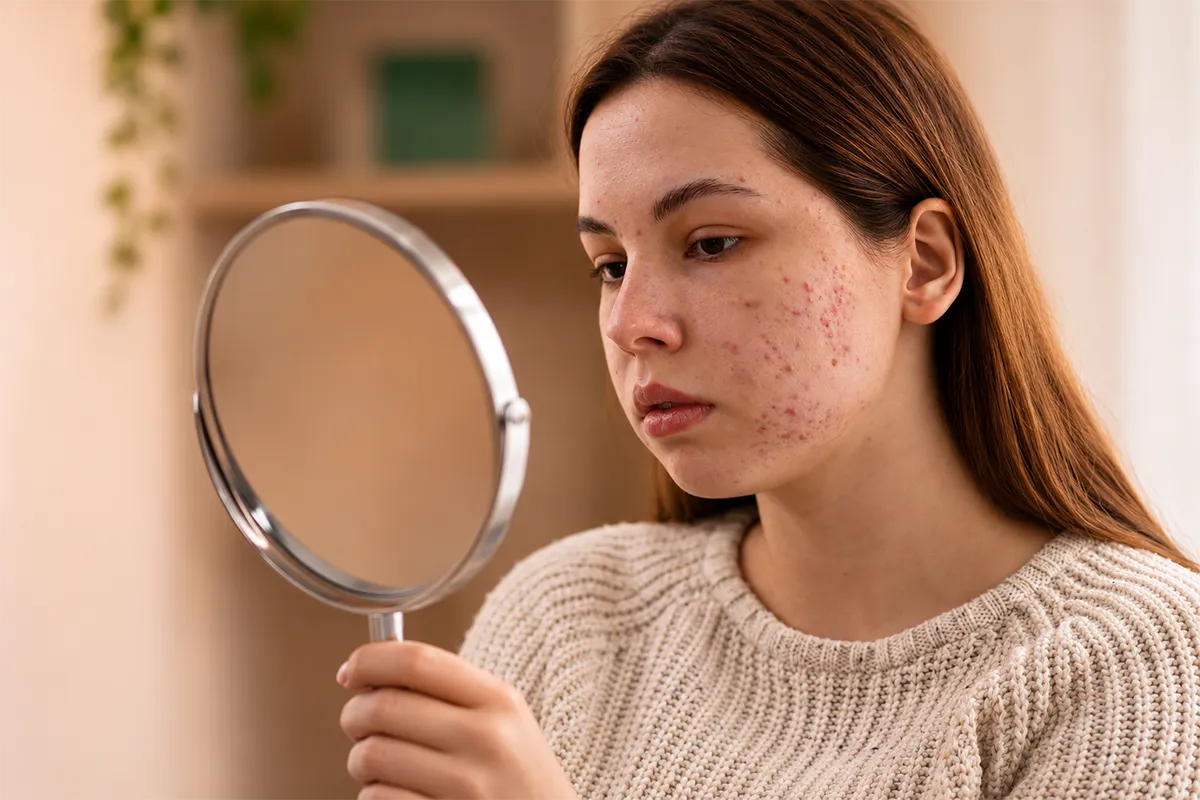
- Papules and pustules - red bumps and classic pimples, where inflammation has set in
- Nodules and cysts - deep, firm, painful lumps that never come to a head
Cystic acne is the one to act on
Cysts sit deep, contain pus and tissue, and leave pitting and uneven colour behind. They are the type most likely to scar permanently, and scarring is far easier to prevent than treat. Painful deep lumps are a reason to see a doctor early rather than keep trying things from the chemist.
What causes acne - and what does not
Hormones do most of the work, which is why acne starts at puberty and can persist or appear for the first time in adulthood. Genetics matter too. The usual suspects mostly do not: chocolate and lollies have not been shown to cause pimples, the diet evidence generally is weak, and poor hygiene does not cause acne either.
Two things genuinely make it worse. Over-washing and scrubbing irritate the skin, which inflames it further. And picking drives inflammation deeper - which is how a spot that would have faded becomes a scar that does not.
Hormonal acne, back acne and acne-prone skin
Hormonal acne sits along the jawline, chin and neck, flares in the week before a period, and is common in adult women who had little acne as teenagers. If it comes with irregular periods or excess hair growth, say so - polycystic ovary syndrome is worth ruling out.
Back and chest acne works the same way, in skin with larger oil glands. Sweat under tight clothing makes it worse, so showering promptly after exercise helps more than scrubbing. And "acne-prone skin" is a description rather than a diagnosis - skin that blocks readily, where the practical move is non-comedogenic products and not piling on more.
Fungal acne is not acne
This explains a lot of treatment failure. What people call fungal acne is malassezia folliculitis - a yeast overgrowth in the hair follicles, not the bacterial-and-oil process above.
It looks different once you know what to look for: small bumps strikingly uniform in size, itchy rather than sore, clustered across the forehead, chest, upper back and shoulders. It often follows humidity, heavy sweating or a course of antibiotics.
The important part is that acne treatments do not clear it, and some make it worse. Breakouts that itch, look unusually uniform, or have ignored months of acne products are worth examining - the treatment is different entirely.
Baby acne
Small red or white bumps on a newborn's cheeks, nose and forehead are common, appear in the first few weeks, and are harmless - thought to relate to maternal hormones still circulating. It clears on its own within weeks to a few months.
No treatment is needed, and adult acne products should never go on a baby's skin. Plain water, gentle patting dry, patience. What does warrant a look is a rash that is weepy, blistered or spreading, or a baby who is unsettled, feeding poorly or feverish - that is a different problem and needs same-day review.
Acne treatment: what to expect
Most mild acne responds to consistent over-the-counter antibacterial treatment. The part nobody mentions is the timeline - six to eight weeks of daily use before judging it. People abandon products at two weeks and conclude nothing works.
When that is not enough, a GP has more to work with: prescription creams that unblock pores, antibiotic options, hormonal treatments where appropriate, and for severe or scarring acne a specialist-supervised tablet course. Which fits depends on your skin, your history, and whether you are pregnant or planning to be.
That conversation does not need to wait for a clinic appointment - a bulk billed telehealth appointment handles it.
| About products: this article does not recommend or endorse any acne product, brand or treatment. Acne treatments are regulated therapeutic goods in Australia. Always read the label, use only as directed, and ask your pharmacist or doctor what suits you. Several are unsafe in pregnancy - say so before starting anything. |
Acne scars, and the dark marks that are not scars
Two different things get called scarring, and only one is permanent. Flat brown or red marks left after a spot clears are post-inflammatory pigmentation - not scars. They fade on their own, though it takes months.
True scars are textural - small pits, shallow depressions and rolling unevenness where inflammation destroyed tissue. These do not fade. Treatments exist through dermatologists and specialist clinics, but none restores skin completely, which makes the honest answer to getting rid of acne scars an unsatisfying one: prevent them. Treat inflammatory acne early, and do not pick. If you already have scarring, a GP can advise on referrals and on treating active acne first.
When to see a doctor about acne
Healthdirect and Better Health Channel point to the same list: over-the-counter treatment has not worked, the acne is moderate or severe, painful or cystic, already scarring, there is a family history of scarring, you are pregnant or planning to be, you have symptoms of polycystic ovary syndrome, or it is affecting how you feel about yourself.
That last one is not a soft reason - emotional and social distress is listed by health authorities as a legitimate trigger for treatment.
Where 13CURE fits
Ongoing acne management belongs with your regular GP, who can review progress over months and refer on if needed. 13CURE covers the after-hours end: a lesion gone hot and painful, a sudden severe flare, or a parent worried about a baby's skin at 9pm. Bookings run Monday to Friday 6pm to 8am, Saturdays from 12pm, and 24 hours Sundays and public holidays. Consultations are bulk billed for eligible Medicare and DVA cardholders - the bulk billing GP page covers eligibility, and a home doctor visit may be available depending on location, listed on the areas we cover page.
| For an acne concern after hours, book a consultation online or start a telehealth booking. |