Having a first aid kit is an easy way to be ready for an accident that hasn't even happened yet. It could be a bit of glass in your finger, a sprained ankle after tennis lessons, or a little steam from the kettle burning your hand, all of which can be remedied if the correct supplies are in reach to ease the problem, and if the condition is serious, then until professional medical assistance comes.
Most people have a first aid kit, but few of us are aware of what should be in it. An up-to-date supply of what you need could be invaluable in an emergency. Being able to look after it, knowing what should be in there, and learning a couple of first aid essentials will give you more confidence when the unexpected occurs.
This how-to will show you what to keep in a fully equipped first aid box, where to keep it, and how knowing some simple first-aid skills is as important as having the kit.
What is a First Aid Kit?
A first aid kit is a set of basic first aid supplies used to treat minor cuts, burns, and grazes until professional treatment can be administered.
The emergency supplies and equipment are kept at a site where there might be injuries, for treating people until they get medical help
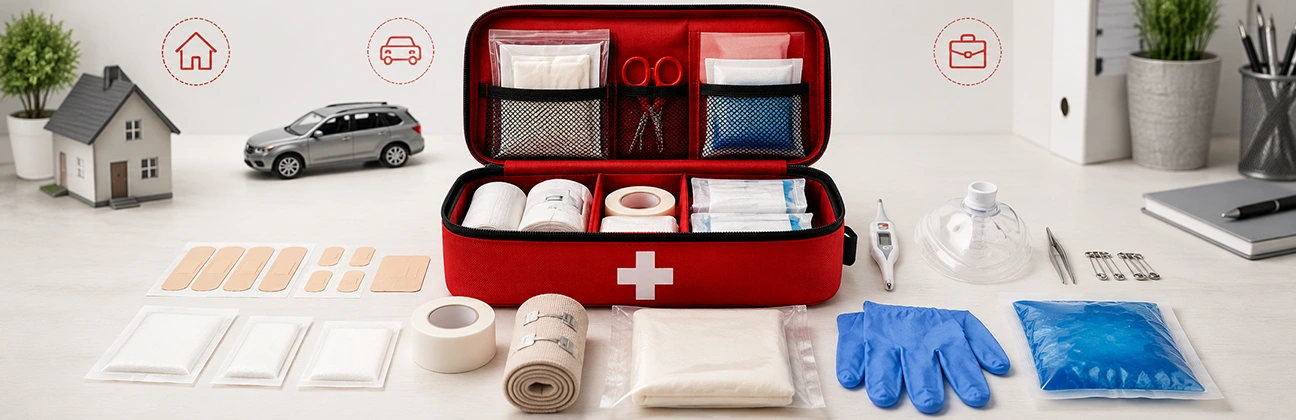
An initial- aid kit contains: Antiseptic cream, plasters (Band-Aids), sterile bandages, sterile eye dressings.
Purpose of First Aid Kit
Its purpose is to help manage common situations such as:
- Small cuts and grazes
- Sprains and strains
- Blisters
- Superficial wounds
A first aid kit will enable you to administer prompt assistance in most everyday situations, but it is no replacement for prompt professional assessment and emergency treatment when serious injuries or symptoms develop.
Why Every Home Should Have a First Aid Kit
Nothing is more instant than an accident Luckily, having a readily available first aid kit means that you will save time trying to locate necessary supplies while someone is bleeding.
Keeping a first aid kit nearby can help you:
- Clean and Protect Minor Wounds
- Limit the chance of infection by keeping the wound clean.
- Coverage cuts and grazes
A well-stocked first aid kit can be useful to have at home, in the workplace, in schools, in the car, or while on the move.
Essential Items Every First Aid Kit Should Include
Although each household is unique, most of the first aid kits should have a basic standard of supplies.
Wound Care Supplies
These are used to clean and prevent small cuts and scrapes.
Include:
- Assortment of bandages of various sizes.
- Gauze pads sterile
- Adhesive tape
- Sterile wound dressings
- Antiseptic wipes or saline
- Cotton balls, or cotton swabs
Bandages and Support Items
These support sprains and help secure dressings.
Common items include:
- Elastic bandage
- Triangular bandage
- Finger bandages
Medical Tools
Useful tools can help make treating injuries much easier and more sterile.
A first aid kit should include:
- Scissors
- Tweezers
- Disposable gloves
- Safety pins
- Digital thermometer
- CPR face shield/barrier device
Cold Packs
An instant cold pack can be used to treat swelling from small bumps and sprains. Always follow the product directions and do not put cold packs directly on the skin.
Is it advisable to keep drugs in a first aid kit?
Some people request to have frequently used over-the-counter medications included in their first aid kit.
These may include products intended for temporary relief of:
- Discomfort.
- Fever
- Allergic responses
- Mild skin irritation
Before including medicines:
- Follow the label directions.
- Store them according to the manufacturer's instructions.
- Check expiry dates.
If in doubt, check with a suitably qualified health professional about whether a drug is appropriate for yourself or someone else.
Position of a First Aid Kit
It is best to have more than one first aid kit.
Common locations include:
- At home.
- In your car
- At work
Store your kit somewhere that is:
- Easily accessible to adults
- Cool and dry
- Clearly labelled
- Out of the sun
Essential First Aid Knowledge
It is essential to have some first aid knowledge in order to be able to use the above supplies.
There are several important first aid essentials that you must know:
Stay Calm and Evaluate the Situation
Ensure that you are in a safe place as well as the injured one.
Control the Bleeding
Place pressure on a small wound using a sterile bandage or a piece of gauze. Go to a hospital immediately if the bleeding is heavy or cannot be controlled.
Cool Minor Burns
The minor burns must be cooled under cool running water. Avoid using anything else like butter, oil, ice, or toothpaste on burns.
Clean Minor Wounds
Clean the wound gently and apply a dressing if required. Check if there is any infection, such as swelling and redness of the wound.
Know When to Call for Help
Seek medical assistance immediately if someone:
- Has trouble breathing
- If it is unconscious or unresponsive
- Has severe bleeding
- Experiences chest pain
- Suffers from a severe head trauma
- Has a suspected fractured bone
What makes a first aid course different?
Having a first aid kit is great, but knowing how to use it properly is more important. A first aid course will provide practical experience and increase your confidence.
Topics commonly covered in a first aid course are:
- How to perform CPR
- Managing the bleeding
- Caring for burns
- How to act when someone is choking
- Identifying a medical emergency
- Basic wound care.
In some workplaces, employees are also encouraged to undertake recognised first aid training.
How Frequently Do You Need To Check Your First Aid Kit?
A first aid box will need to be checked when provided for contents or expiry dates. Aim to check it every 6 to 12 months.
During each check:
- Replace expired items.
- Restock used supplies.
- Inspect packaging for any damage.
- Change batteries in digital thermometers if necessary.
- Update the emergency contact information stored inside the kit.
Keep your supplies up to date so they're there when you need them.
First aid kit or box? Is there any difference?
The terms first aid box and first aid kit are widely used interchangeably. Both actually refer to the same thing, which is a box and/or a bag that can be used in case of sudden accidents and mishaps.
The difference is usually the container itself:
- First aid box, as commonly understood, refers to a hard plastic or metal box.
- First aid kit: could be contained in a hard case, a soft zip pouch, a backpack, or a portable bag.
They consist of the same content as the description, no matter what the title is.
Tips for Keeping Your First Aid Kit Ready
An organised kit seems more functional in stressful situations, and simple habits can keep it organised:
Simple habits include:
- Break down stuff into easy-to-access, clearly labelled areas.
- All emergency telephone numbers should be kept in the kit.
- Make sure that family members are aware of the location of the first aid box.
Conclusion
A fully equipped first-aid kit is only one aspect of your daily contingency planning. If you have a fully stocked kit and a good program for replenishing the supplies, then you can treat most minor injuries until you can be seen by an expert.
Just as crucial is the knowledge of first aid and keeping up-to-date with your equipment. It may be worthwhile to undertake a recognised first aid course, which, as well as being useful in an emergency, may also increase your confidence.