Key Takeaways
That was a load of information, I know. As your GP, these are the main points that I want you to take away:
- It won't go away: telehealth is a permanent, convenient, and safe means of healthcare for all Brisbane residents.
- Use it wisely: It's excellent for script renewals, medical certificates, mental health check-ins, and test results.
- Do not use it in some instances: Always dial 000 in case of emergency (chest pain, difficulty in breathing). For any issue that requires a "hands-on" physical exam, you have to go in person.
- Consider the expense: When making a booking, ask whether it will be bulk billed. Take note of the "12-Month Rule": to be bulk-billed, you generally need an in-person visit at that clinic within the last 12 months.
- Get ready: prepare yourself in the best possible way. Sort out your tech, find a quiet spot, and jot down your questions.
- It is safe: Your medical information is protected by the same stringent Australian privacy laws that apply to in-person visits.
Your Complete Guide to Telehealth in Brisbane
Hey, I am a GP, and I do understand that it is not always very convenient to go to the doctor's office. If you are a busy mother in Aspley, stuck in traffic on the M1, or feeling so ill in New Farm that you cannot even think about driving, accessing telehealth services in Brisbane can be a lifesaver. That's where telehealth comes to help.
Telehealth doctor consultations via phone or secure video have become a necessary part of our healthcare system. It is no longer just a temporary pandemic measure, but a permanent, safe, and efficient way of medical care delivery in Australia has been established.
Whooping figures tell the story. More than 118.2 million telehealth services were provided between March 2020 and July 2022, serving 18 million Australians. This is a clear indication of how many people have turned to this service and put their trust in it.
However, it is not just a matter of laziness or convenience. The essence of it is to make healthcare accessible to all. This is especially true for Queenslanders living in rural and remote areas who may be far from a GP or a specialist. Moreover, it significantly helps manage the pandemic by enabling sick people to stay at home while still receiving the care they need.
As a GP, I would like to inform you about the details of a telehealth consultation, how to conduct one in Brisbane, its payment, and how to make the most of your telehealth visit.
Can Brisbane Patients Access Telehealth GPs?
Yes, absolutely. Telehealth is available to everyone in Queensland, and a wide range of healthcare providers, including GPs, specialists, mental health professionals, and allied health providers, have adopted it in their practices.
It is not only a couple of clinics doing this; the whole Queensland Health network is organised to sustain virtual care. Moreover, there are even telehealth technical support centres available for doctors and patients.
When scheduling a telehealth visit, you are likely to be presented with two options:
- Phone Consultation: A traditional phone call. It is very efficient for simple, routine issues such as a repeat prescription or a review of stable test results.
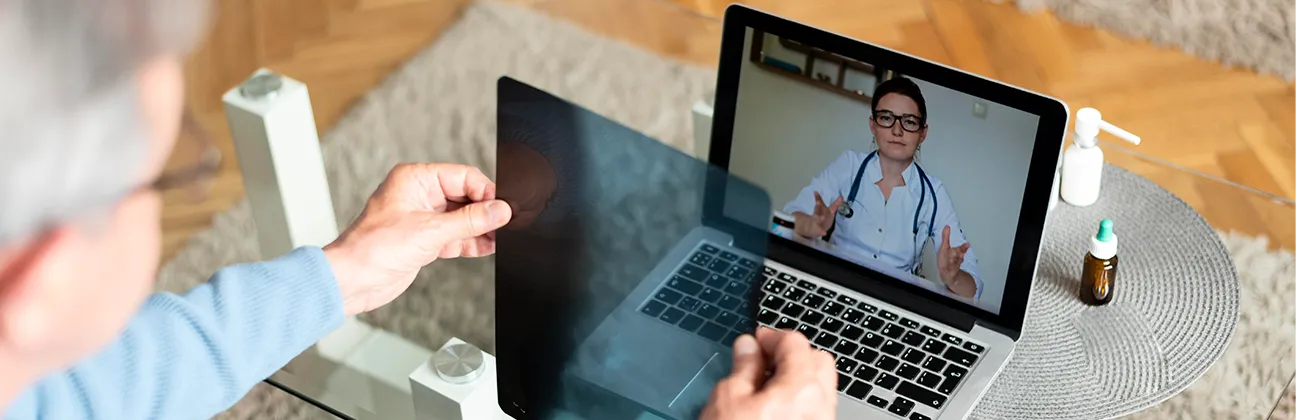
- Video Consultation: This involves a call on a secure platform, similar to FaceTime or Zoom. As a doctor, I usually opt for a video call if it is feasible. The Royal Australian College of General Practitioners (RACGP) indicates that video "makes a positive contribution" and is safer for more complicated issues. It allows you to see the patient, which is very important for assessing a skin condition, a child's breathing, or just establishing a better rapport. Besides that, it is an excellent solution for patients who are hard of hearing and may rely on lip-reading.
The same technology can be used to carry specialist care from the city to the country. For instance, you can be at your local GP clinic in a Brisbane suburb for a video consultation with a specialist from a different city. This "hub and spoke" system is saving you a great deal of time and travel, and it is all a part of the QLD Health system.
How Does an Online Doctor Consultation Work? (A Step-by-Step Guide)
It may sound complicated, but most of the time the procedure is quite straightforward. Let's take a look at it.
Step 1: Booking Your Appointment
There are primarily two ways to schedule a telehealth session:
- Your Regular GP: Almost all local clinics in Brisbane are currently providing telehealth. You may call them or use their online booking platform to schedule an in-person visit. Frequently, "Telehealth Consult" will be displayed as one of the appointment options.
- On-Demand / After-Hours Services: The rest are solutions specially designed for urgent care, mainly after hours when your regular GP is closed. In such cases, you usually submit a real-time request online and get assigned a position in a queue to talk to the next available doctor.
It is simple to book a telehealth consultation via our website at any time of day.
Step 2: The "Virtual Waiting Room"
There is no need for you to be a technician. A clinic will generally provide you with a secure link via SMS or email for a video call.
At the given time, you just need to tap on this link. You will then be placed in a private and secure online waiting room. The doctor will be notified of your arrival and will connect with you as soon as he is free.
Step 3: The Consultation
The doctor will appear in the video consultation and, as in a clinic, will check your name and date of birth to ensure your confidentiality.
After that, the consultation will be very much like a normal one. We are trained to pay closer attention to what you say about your symptoms, the tone of your voice, and (if on video) your body language and any helpful signs. All this is done to make the correct diagnosis.
Step 4: After the Consult (eScripts, Referrals, and More)
This is the "what next" part that is now so streamlined.
- Electronic Prescriptions (eScripts): If you require a prescription, you will no longer receive a paper one. Instead, your doctor will send a digital script (eScript) to you via SMS or email. This message contains a unique QR code, also known as a "token". You just bring your phone to any pharmacy, and the pharmacist will get your prescription by scanning this token. It is quick, safe, and you cannot misplace it.
- Medical Certificates & Referrals: If you need a medical certificate for your job or a referral for a blood test or X-ray, the doctor will usually email it to you as a secure PDF. Subsequently, you may send the certificate to your employer or print the referral to your local pathology or imaging lab.
A Real-Life Scenario: The Harris Family
Let us see how it works by the example of the Harris family from The Gap. Sarah, a busy mother, woke up with a painful, red eye. Her little two-year-old, Leo, also had a fever and a cough. Instead of putting all of them in the car to wait at a clinic and possibly spreading germs, she booked an after-hours telehealth appointment.
Through video, the GP looked at her eye, diagnosed conjunctivitis, and sent an eScript token to her mobile. After that, they inspected Leo's breathing and symptoms (such as those in respiratory illnesses), provided reassurance and clear 'red flags' to watch for, and sent a medical certificate for Sarah's work via email. The entire process lasted half an hour, and the prescription was at her local pharmacy
Is My Telehealth Consultation Bulk-Billed in Brisbane? Understanding the Cost
Most of the time, a patient asks me this question. The answer is "it varies". As a GP, I want to be transparent about expenses, so let's clarify the details around Medicare.
What is Bulk-Billing?
Bulk-billing is often referred to. It is easy to understand what it means. Simply put, it's free-of-charge medical care. Your doctor invoices Medicare directly and accepts the Medicare benefit as full payment for your consultation. You don't pay anything.
The "12-Month Rule" Explained (The Most Important Part)
Medicare has a specific condition for you to be eligible for a bulk-billed GP telehealth consultation. You must have a prior relationship with the GP practice.
This means that you should have had a face-to-face appointment at that same clinic (or with another doctor in that same clinic) at least once in the last 12 months.
It's not just bureaucratic red tape. It is there to ensure "continuity of care". Your regular doctor knows you, your medical history, and your medications. Telehealth is safest and most efficient when it's part of this ongoing relationship. Medical authorities fear that separate, "pop-up" services, which are not connected to your regular doctor and may not provide the best long-term care, will become popular.
On the other hand, it can be a "catch-22" situation due to this regulation. What if you have just moved to Brisbane? What if you do not have a regular GP? And what if you need urgent help after hours and your regular clinic is closed?
In such situations, you can still access telehealth from some providers, but if you do not comply with the 12-month rule, services will probably not be bulk-billed by Medicare. You will have to pay for the consultation privately.
The best advice I could give you is to always inquire about the cost and any Medicare rebates when booking your appointment.
Good News: New Incentives
The good news is that the government supports bulk billing through new programs like MyMedicare for patients who register with a regular practice. This will create new incentives for GPs to provide telehealth to their registered patients and, hence, keep care costs low.
When is Telehealth the Right Choice? (And When Isn't It?)
Telehealth is a valuable tool; however, it is not the right choice for every case. As a doctor, my primary concern is your safety. The most important question we ask is: "Is a Physical examination necessary for this patient?" If a physical exam is required, our home doctor services can send a GP to your door
Here is a simple guide to help you decide.
| Issue / Service | Best via Telehealth (Phone or Video) | Best In-Person (at the Clinic) |
|---|---|---|
|
Emergencies (Chest pain, severe breathing trouble, major bleeding, weakness on one side) |
NO. Call 000 immediately. |
NO. Call 000 immediately. |
|
Prescription Renewals (for a regular medication) |
Yes |
Yes |
|
Medical Certificates (e.g., for gastro, cold/flu) |
Yes |
Yes |
|
New, severe pain (e.g., sudden chest or abdominal pain) |
No |
Yes. This needs a hands-on physical exam. |
|
Mental Health Check-in (anxiety, depression, counselling) |
Yes |
Yes |
|
New Skin Rash or Wound Review |
Yes (Video is best) |
Yes |
|
Checking a new breast lump |
No |
Yes. This always needs a physical exam. |
|
Children's Immunisations or Procedures (e.g., stitches) |
No |
Yes. This is a physical procedure. |
|
Blood Test / X-ray Referrals |
Yes (Referral is sent digitally) |
Yes |
|
Reviewing Test Results |
Yes (Often a quick phone call) |
Yes |
|
Managing a stable chronic disease (e.g., diabetes, blood pressure) |
Yes |
Yes |
Let me give you this advice: if your problem is "talk-based" (like mental health or a results follow-up) or a "simple-transaction" (like a script), telehealth will do just fine. If it is "hands-on" (like a new pain, a lump, or a procedure), you have to be seen in person.
Telehealth for Brisbane Families: Looking After Your Kids
As a GP and parent, I understand that when your kid is not well, you want an answer as soon as possible. Telehealth has been a revolutionary tool for families all over Brisbane.
It is not only about avoiding the trip with a sick infant in a car, but also about timely, easy access to care. The RACGP supports Medicare-subsidised telehealth for children and families, especially for those who have difficulties in accessing face-to-face services, such as those living in rural and remote Queensland.
Besides minor respiratory diseases, telehealth is a potent tool for children's and teenagers' mental health issues. The need for support among young people has grown drastically, especially in the case of anxiety and depression, since 2020. For a young person experiencing mental health problems or a worried parent, telehealth is a private, accessible, and less-intimidating "door" to get in touch with a GP. From there, we can talk about what's going on and, if necessary, develop a mental health care plan.
How to Prepare for Your Telehealth Appointment: A Patient's Checklist
Proper preparation can do wonders. To get the most from your appointment and help your doctor's work, kindly review this brief checklist before your call.
"Is My Data Safe?" A Note on Privacy and Security
This is indeed a very relevant and vital question. The information you provide is confidential, and you need to be reassured that it is safe.
Our Responsibility (The Doctor's Side)
I would like to state that Australian telehealth services must comply with the same stringent privacy laws (e.g. Privacy Act 1988) as physical clinics. All your health data is considered "sensitive information" and is protected by law. We conduct our consultations on secure, encrypted platforms and keep your records there as well.
Your Responsibility (The Patient's Side)
Confidentiality in telehealth is a joint effort. While we make technology safe, there are a few simple things that you can do to make sure that your side of the conversation is secure:
- Pick a quiet location: Do not conduct your consultation in a noisy office or a public cafe. Locate a quiet room at your home or in your car where no one can listen in.
- Make your internet connection secure: Do not use public Wi-Fi networks for a secure video call. Your home Wi-Fi (which should be password-protected) or your phone's mobile data is much safer.
- Confirm: At the beginning of the call, just make sure that the person you are talking to is your doctor. We will do the same by confirming your name and date of birth.
What Do Patients Think? The Real Feedback on Telehealth
As a doctor, I've seen firsthand how much this has helped my patients. But you don't have to take my word for it. The national data shows that Australians have embraced telehealth and are highly satisfied with the care they receive.
The View from the Australian Bureau of Statistics (ABS)
The most recent Patient Experience survey conducted by the ABS helps us to understand thoroughly:
- During the 2023-24 financial year, 5.1 million Australians aged 15 and above availed a telehealth consultation.
- Most telehealth users (89.2%) reported they would use the service again.
- Most importantly, patients felt that they were treated with respect. 83.2% (more than 8 out of 10) felt that their telehealth practitioner 'always' showed them respect, and 80.5% felt that their practitioner 'always' listened carefully.
This information tells me a strong story. It shows that telehealth is successfully eliminating those barriers, such as travel, time, and inconvenience. Moreover, it is doing this without losing the human connection and respect that is the basis of good medical care.
Other research reaches the same conclusions: convenience and safety are the chief satisfiers for patients. In the same survey, the majority of participants said they "would not have been able to access their health consultation if it were not for telehealth". This is the real power of the service.