
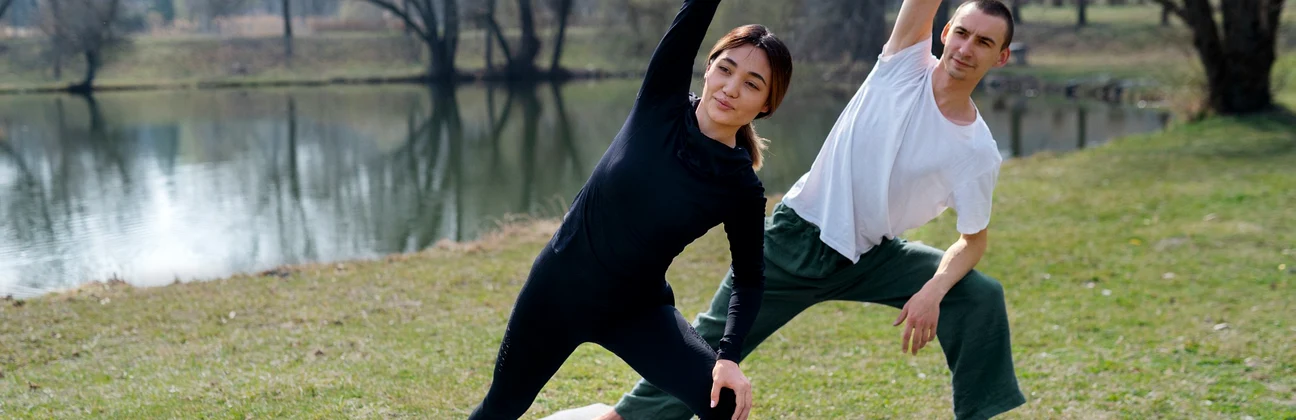
Yoga has become one of the most popular physical and mental health exercises. It can help to improve flexibility, alleviating aches and pains for day-to-day life, and can supplement an overall holistic approach to pregnancy joint pain treatment if advised by a medical professional.
Different from high-impact exercise, yoga strengthens both body and mind by incorporating slow body movements, relaxing breathing, and meditation techniques. It is easily tailored for beginners, experts, and various health issues.
No matter if you want to relax, gain more mobility, or create a healthier lifestyle, this guide will tell you all that you need to learn.
What is yoga?
Yoga is an ancient practice that involves physical postures, breathing exercises, and techniques for focusing the mind.
A typical yoga session may include:
- Gently stretching
- Balance training.
- Absolute strength
- Breathing consciously
- Relaxing/meditating
Yoga encourages an awareness of breath and movement, and many participants find that they feel calmer and more aware of their bodies when they do yoga.
Different Types of Yoga
Yoga has numerous styles, all of which are focused on doing different tasks at different speeds.
Hatha Yoga
The most popular type of yoga for beginners is hatha yoga.
It usually includes:
- Simple poses
- Slower actions.
- Breathing exercises
- Relaxation
This style allows learners to settle their bodies into the right position.
Vinyasa Yoga
Vinyasa emphasizes bringing movement and breath together in a series of flowing postures.
It tends to be:
- More lively
- Physically active
- Yin Yoga
It involves holding specific yoga poses for a few minutes to stretch the muscles and body tissues. The stretch is held for between three and five minutes.
Yin Yoga
Many people practise yin yoga to:
- Gain flexibility
- Decrease muscular tension
- Support mindfulness
- Hot Yoga
Hot Yoga
Hot yoga is practiced in a heated environment.
Those who enjoy the warm environment may find that stretching feels easier and they sweat more during exercise.
Conversely, hot yoga is not appropriate for everyone.
People should:
- Make sure you are drinking plenty of fluids.
- Listen to their bodies.
- Take breaks if they are unwell.
Consult your doctor before participating if you have certain medical conditions.
Restorative Yoga
Restorative yoga is a calming floor practice that utilizes props and gentle postures.
Sessions often involve:
- Lack of progress or movement.
- A very slow breath.
- Long durations of rest
Yoga Nidra
Yoga nidra, or "yogic sleep" as it is sometimes called, is a guided relaxation done in a reclined position.
The practice of yoga nidra does not involve movement in the same way that a physical session might.
A typical session may include:
- Breathing that is coached.
- Mindfulness
- Visualisation
- Relaxation techniques
Numerous individuals also practice yoga nidra as part of their nightly routine in an effort to de-stress.
Health Benefits of Yoga
Practising yoga regularly (perhaps two or three times a week) can provide a comprehensive range of physical and psychological health benefits.
Improves Flexibility and Mobility
One of the most obvious benefits of yoga is that you become more flexible.
A good number of poses have the gentle effect of stretching muscles, tendons, and connective tissue, thereby enhancing mobility in the joints.
Greater flexibility may also:
- Help make everyday activities easier to perform.
- Improve posture.
- Help to lessen the sensation of stiffness.
- Support proper movement techniques.
- Builds Strength Without Heavy Equipment
While a lot of the yoga poses seem very gentle, numerous poses require a lot of muscle. If you have any health concerns, speak with a doctor before getting started.
Holding bodyweight positions helps strengthen:
- Core muscles
- Legs
- Arms
- Back
- Shoulders
Improved muscular strength allows for better stability and functional movement during everyday life.
Supports Balance and Coordination
Many yoga poses are performed while standing on one foot or holding a balance.
Practising balance regularly may help improve:
- Perception of the body
- Coordination
- Stability
- Confidence in motion
As you get older, exercises to help improve your balance become essential.
Yoga May Help Reduce Stress
Deep breathing and gentle movement promote relaxation and could potentially aid in lowering the stress response.
Many people report feeling:
- More casual
- Less mentally overloaded
- More resilient to daily stresses.
- More emotionally even
Results may differ from person to person and should not be used as a substitute or replacement for professional mental health care.
Encourages Better Sleep
Gentle stretching and breathing exercises can form a relaxing pre-bedtime routine that promotes good sleep patterns.
Supports Heart Health
Certain styles of yoga may promote a sense of relaxation, which could be beneficial to an individual's overall well-being as part of a balanced lifestyle comprising:
- Exercise regularly
- Balanced diet:
- Getting enough sleep
Why Has Morning Yoga Become So Popular?
A common preference is for morning yoga, since it offers a peaceful and invigorating beginning to the day.
Even a short session of 10 to 20 minutes may help:
- Awakes with stiff muscles.
- Improve circulation, tone, and strengthen.
- Create positive associations with breathing.
A Simple Morning Yoga Routine
Beginners can start with:
- Gentle neck stretches
- Cat-Cow stretch
- Low Lunge
- Standing Forward Fold
- Mountain Pose
- Seated breathing
It is preferable to be more regular than to practice for longer sessions.
Should You Attend Yoga Classes?
Even though a lot of people successfully learn yoga online, there are some benefits of being in a yoga session.
Qualified instructors can help participants:
- Learn the correct technique.
- Change poses as needed.
- Practise better postural awareness and alignment.
- Improve or increase one's confidence.
Yoga classes additionally offer a sense of structure and social support that could lead to better long-term adherence.
When choosing a class, consider:
- Experience level.
- Class size
- Teaching style
- Schedule
- Instructor qualifications
Sadhguru and Modern Yoga
There is a large crossover between those searching for yoga and those looking for Sadhguru, who is an Indian yogi, author, and the Isha Foundation's founder.
His teachings often explore topics including:
- Meditation
- Breath awareness
- Inner balance
- Mindfulness
Tips for Starting Yoga Safely
You don't need a lot of fancy equipment at the start of your yoga practice, and you don't need to be super flexible.
You just need to:
- Wear Comfortable Clothing
- Use a Stable Yoga Mat
- Focus on Proper Technique
- Listen to Your Body
- Practise Regularly
Common Beginner Mistakes
Most beginners make similar mistakes in the first weeks.
Avoid these habits:
- Comparing yourself to others
- Not paying attention to correct alignment.
- Skipping warm-up exercises
- Going without rest days when necessary
- Anticipating instant elasticity.
Progress in yoga is achieved over time and becomes self-evident through regularity, not perfection.
Is Yoga Part of a Healthy Lifestyle?
Yes, Yoga complements many other good habits:
Many people combine yoga with:
- Walking
- Swimming
- Nutrition for balance
- Getting a good night's sleep
- Strategies for handling/controlling stress
Different forms of physical activity can keep you healthy and fit.
Who Practices Yoga?
Yoga is frequently practiced by people of varying ages. The exercise may also be accessible for those who have a lower level of physical fitness.
Nevertheless, some may be advised by professionals before starting, such as:
- Had recent injuries.
- Experience persistent joints issues
- Experience problems with balance
- Are pregnant
- Have chronic medical problems
If you have any medical problems or find that exercise causes pain, consult a qualified health professional for individual advice before embarking on a new exercise programme.
Conclusion
Yoga is not the same as a stretching class. It combines movement, awareness, and breathing into something that can be good for you and for your physical and mental flexibility and balance.
If you are a beginner and you simply want to get this day going with yoga, relax with yoga nidra, have a gentle yin yoga, or want to have a Hot Yoga experience, then consistency is more important than intensity.
Start slowly and be aware of your body. Find a routine that you can implement without strain, and that suits your lifestyle, and eventually yoga can form a part of your enjoyable, healthy balance to living.