
Common Eye Problems: Understanding the Symptoms
Eyes are delicate, and when something feels not-quite-right, it can be cause for concern.
If you feel like there's something in your eye - or you are experiencing another discomfort in that area - you've landed in the right place. In this article, we'll discuss the most common eye problems, including:
- Itching
- Redness
- Foreign objects in the eye
- Burning
- Pain
- Blurred vision
We'll share how to recognise your symptoms so you can decide whether to contact a trusted doctor for further care. Let's get started.
Itchy eyes
An itching sensation in the eyes can be highly annoying and, in some cases, make it challenging to keep your eyes open. Typically, any eye itching is caused by an allergy and can be treated with over-the-counter antihistamine medication and lubricating eye drops. A cold compress (a washcloth dampened with cold water, for example) can also help relieve symptoms.
More severe eye itchiness may require prescription eye drops. You might consider scheduling an appointment with your healthcare practitioner for advice.
If it's your eyelids - not the eye itself - that is red, inflamed, and itchy, you could have a condition called blepharitis. Visit your doctor for a diagnosis and a suitable treatment.
Take action now:
Avoid rubbing the eye area. Doing so releases chemicals that can make the area feel even itchier!
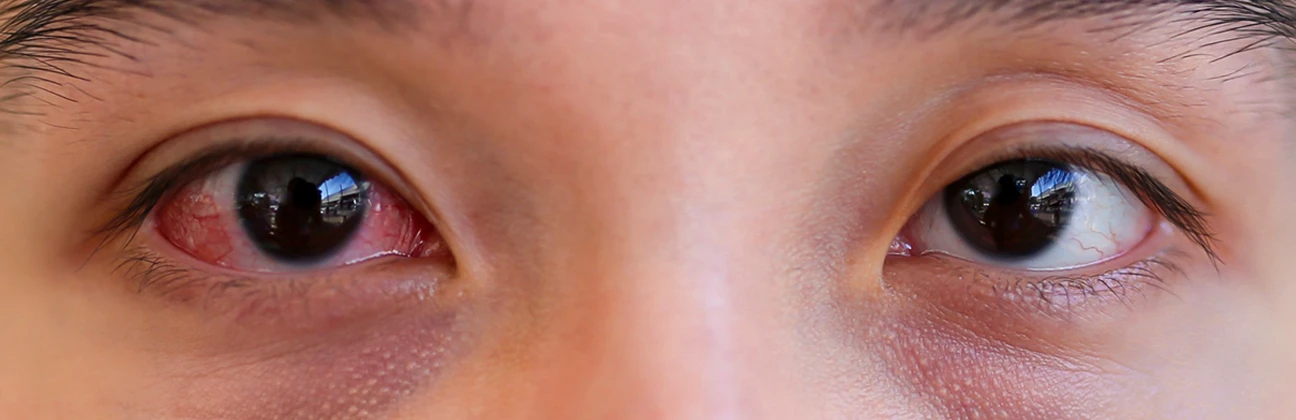
Red eyes
A whole host of factors can cause redness in and around the eyes. Let's take a look at some of the most common.
Pink eye
Pink eye, also known as conjunctivitis, is a condition typically found in children, though adults can get it too. Symptoms include swelling, redness, itchiness, burning, and watering. Some forms of conjunctivitis are contagious, so it's best to seek treatment promptly.
Allergies
Allergies typically flare up in the springtime but can be present year-round. If you come into contact with something you are allergic to - whether that is cats, fumes, dust, mould, or pollen - your eyes could become red and itchy. An oral antihistamine should help relieve symptoms. If not, visit your doctor and ask them about your prescription options.
Broken blood vessel
Tiny blood vessels in the white of the eye (sclera) can become broken following extended periods of eye strain, excessive rubbing, or for no reason at all. When blood vessels break, the eye becomes bright red; this is called a subconjunctival haemorrhage. A red eye caused by a subconjunctival haemorrhage can look alarming, but is typically harmless.
Take action now:
Although a subconjunctival haemorrhage shouldn't cause any damage, schedule an appointment with your GP now. It's better to be safe than sorry.
Eye trauma
If you are hit in the eye, you will most likely experience redness, acute pain, and even blurred vision. There could also be hidden damage in the eye, such as a detached retina. This can be very serious. If you suffer this kind of trauma, seek professional treatment as soon as possible.
Take action now:
If you have experienced eye trauma, do not rub your eye under any circumstances. For light relief, apply a cold compress or ice pack to the area.
Foreign objects in the eye
Having a foreign object in your eye can be incredibly painful. Seek attention right away, especially if it's a sharp object like a thorn or piece of metal. Please do not attempt to remove it yourself, as you could cause further damage. Instead, keep the eye closed. If you have one, put an eye shield over the affected eye.
Take action now:
Not everything that finds its way into your eye requires urgent attention. If it's just a piece of dust or an eyelash that's bothering your eyes, rinse it out using a saline solution or lubricating eye drops.
Burning eyes
Usually, burning eyes are caused by one of the following:
- Tiredness
- Allergies
- Dry eyes
- Vision stress (for example, after spending a long time working on the computer)
In most cases, burning eyes are not an emergency and will subside on their own. If the burning persists or becomes unbearable, visit your doctor.
Take action now:
Over-the-counter lubricating eye drops can relieve burning sensations. A cool, moist compress held over the eyes can assist, too.
Eye pain
There are many different types of eye pain: sharp, dull, constant, intermittent, throbbing, stabbing, internal, and external.
Generally, if you are experiencing severe eye pain alongside eye redness, see your doctor immediately. Persistent eye pain that worsens when moving the eyes side-to-side or when gently pressing on the eye may indicate internal inflammation. Seek a diagnosis right away.
Eye pain paired with blurred vision is considered an emergency. Visit your doctor or the emergency department.
Take action now:
If there is no redness and your eye pain is dull and feels a lot like a headache, your eyes are probably tired and strained. Try taking paracetamol and resting.
Blurred vision
Blurred vision can be a sign of a serious condition. If the blurring is sudden and does not go away, visit your doctor as soon as possible.
If one eye becomes blurry or goes dark - imagine a curtain going down over one eye - seek urgent medical attention. This could indicate a retinal detachment - or worse.
If the blurring is minor and intermittent, you may be overly tired, or your eyes may be dry or strained. Allergies can also cause a slight, temporary blurring of vision. These are not typically emergencies.
Take action now:
If you are experiencing mild blurred vision, rest your eyes. Look into the distance and then take a nap. If the blurriness persists, make an appointment with your doctor or schedule an eye exam.
Book an appointment with a trusted home doctor.
Eye issues can make driving challenging. Save yourself the risk and let our team of friendly, qualified professionals come to you. Our home-visit doctors are on call after hours to help you identify and diagnose any eye problems you are experiencing.
Please schedule an appointment now or call us on 13 CURE (13 2873).